
 August 19, 2026
5 Signs Your Website Is Quietly Costing You Customers
Most underperforming websites don't look broken — they just quietly leak revenue. Here are five patterns we catch constantly during…
Read more →August 27, 2026
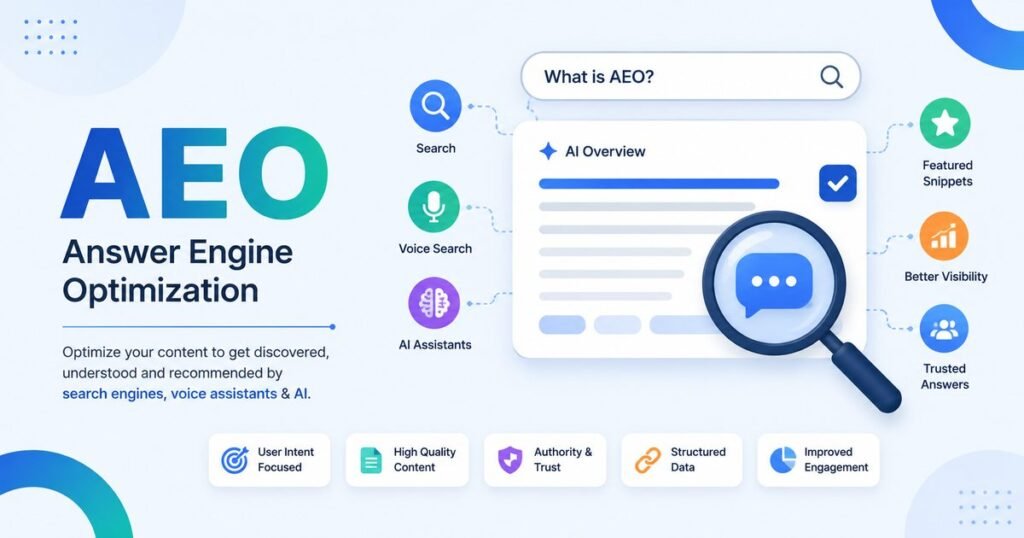
A growing share of buyer research now happens inside AI answer engines — ChatGPT, Perplexity, Google AI Overviews, Copilot — before a single click ever reaches your website. If your brand isn’t showing up in those answers, you’re invisible at the exact moment someone is deciding who to trust, and no amount of paid search spend fixes that.
Answer Engine Optimization (AEO) isn’t a rebrand of SEO — it’s a stricter version of it. Ranking #1 no longer guarantees visibility if a model summarizes the page and never sends a click. The new goal is narrower: get your specific claim, number or explanation quoted, with attribution, inside the answer itself.
Large language models lean on sources that are unambiguous, well-structured and independently corroborated. In practice that means:
Don’t guess — test directly. Open ChatGPT or Perplexity and ask the exact questions your buyers would ask (“best SEO agency for a DTC brand in the UK”, “how does WhatsApp marketing automation work”). Note which brands and pages get cited. Re-run the same prompts monthly and track whether your own content starts appearing. Pair that with Google Search Console’s new AI Overviews reporting and standard tools like Ahrefs or Semrush for the underlying keyword and backlink work — AEO sits on top of solid technical SEO, it doesn’t replace it.
We’re rolling this process out across client accounts now: structured FAQ content, cleaner entity markup, and copy rewritten to lead with the direct answer instead of a marketing preamble. It’s early, but it’s the direction search is moving, and brands that adapt now get cited while most competitors are still writing purely for a ten-blue-links results page.
August 19, 2026
Most underperforming websites don't look broken — they just quietly leak revenue. Here are five patterns we catch constantly during…
Read more → August 11, 2026
WhatsApp routinely sees 90%+ open rates, yet most businesses treat it as an afterthought. Here's a practical playbook for turning…
Read more →Get a free audit of your current marketing and website — no obligation, just a clear plan.
Book a Free Strategy Call